Classes & Costs
Are Pole Class Memberships Worth It? Drop-Ins vs Blocks vs Unlimited
The real maths of drop-ins vs blocks vs unlimited pole memberships — the break-even points, who each model suits, and how to avoid paying for classes you never take.
Pole Club Team5 min read
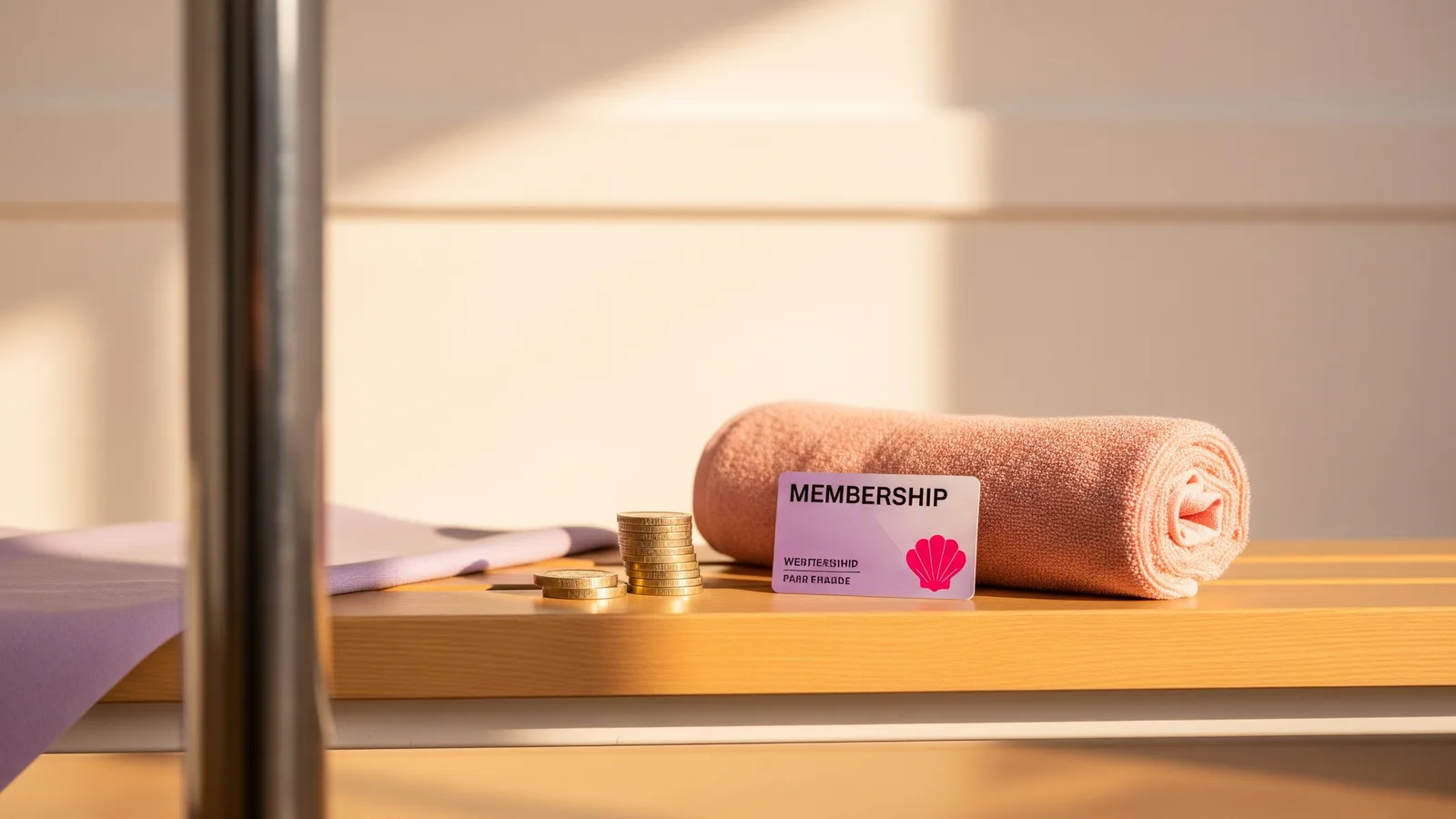
A pole class membership is worth it if you train twice a week or more; below that, a block of classes usually wins. The rule of thumb: an unlimited membership pays for itself once your monthly attendance beats the equivalent block price. Train once a week or less and you're likely overpaying for a membership.
It's a simple frequency question dressed up as a pricing question. Studios price memberships assuming you'll come often, so the more you attend, the more you save — and the less you attend, the more that direct debit stings. Work out how many classes a month you'll genuinely do, and the right model picks itself.
What's the difference between drop-ins, blocks and memberships?
The three models trade flexibility against price. A drop-in is pay-as-you-go with no commitment and the highest per-class cost. A block is a bundle of classes bought upfront at a lower per-class rate, usually with an expiry window. An unlimited membership is a monthly direct debit that lets you attend as many classes as you like.
- Drop-in — maximum flexibility, highest cost, no lock-in. Around £10-£25 a class in the UK.
- Block — a set of classes upfront (often 6 or 10) at a lower per-class rate, typically £9-£16 each, valid for a fixed period.
- Unlimited membership — a monthly fee (roughly £45-£120) for as many classes as you want; cheapest per class only if you attend often.
When does an unlimited membership actually pay off?
An unlimited membership pays off once your per-class cost under the membership drops below the block or drop-in rate — and that happens surprisingly quickly if you train twice a week. Take a £70-a-month membership: attend eight classes and each costs £8.75; attend four and each costs £17.50. The same membership can be a bargain or a waste depending only on how often you turn up.
| Classes per month | £70 membership per class | vs £14 block class | Verdict |
|---|---|---|---|
| 4 (once a week) | £17.50 | £56 on a block | Block wins |
| 6 | £11.67 | £84 on a block | Roughly even |
| 8 (twice a week) | £8.75 | £112 on a block | Membership wins |
| 12 (three a week) | £5.83 | £168 on a block | Membership wins easily |
The honest catch is the attendance you plan versus the attendance you achieve. Almost everyone overestimates how many classes they'll take when they sign up. Life, work and sore muscles get in the way, so if your break-even is eight classes a month, you want to be comfortably clearing that on a normal month, not just a perfect one.
Who suits each model?
The right model is mostly about honest self-knowledge on frequency and commitment. Here's who each one suits best.
Blocks suit beginners and once-a-week polers
If you're starting out or training roughly once a week, a block is almost always the better buy. Beginner courses are usually sold as blocks anyway, keeping the same group together week to week, and you get the lower per-class price without committing to a monthly fee. It's the safe default while you find out how much you love it. Not sure how often you'll go? Our guide to how often you should pole dance is a good sense-check.
Memberships suit the twice-a-week-and-up crowd
Once pole has its hooks in you and you're training two or more times a week — perhaps mixing a technique class with a flow or conditioning session — an unlimited membership is the clear winner and often unlocks perks like priority booking or open-training slots. This is where the maths flips firmly in your favour.
Drop-ins suit the irregular and the curious
If your schedule is chaotic, you travel a lot, or you're still deciding whether pole is for you, drop-ins keep you free of any commitment. You pay more per class, but you never pay for a class you don't take — which is the whole point when your attendance is unpredictable.
Do memberships come with perks beyond price?
Memberships often carry perks that don't show up in the per-class maths but tip the value further. Priority or early booking is the common one, which matters at busy studios where popular classes fill fast. Some memberships bundle in discounted or free open-training slots, member workshop rates, or a percentage off retail like grip aid and polewear.
Weigh those extras honestly rather than letting them talk you into a plan you won't use. Free open training is only worth something once you have moves you can safely drill alone; a workshop discount only counts if you actually attend workshops. If the perks match how you train, they can turn an already-good membership into an easy decision. If they don't, ignore them and judge the membership on the class maths alone.
What should I check before committing to a membership?
Before you sign a membership, check the small print that turns a good deal bad: the notice period to cancel, whether it's a rolling monthly or a fixed contract, freeze options for injury or holidays, and whether "unlimited" excludes certain classes. A membership you can pause when life gets busy is far more forgiving than a locked-in annual contract.
- Cancellation notice — is it a rolling month, or a 3-12 month commitment?
- Freeze policy — can you pause for injury, illness or holidays without losing the rate?
- What's included — do specialist heels, workshops or open training cost extra on top?
- Booking limits — some "unlimited" plans cap how many classes you can pre-book at once.
One more thing worth doing before you commit anywhere: make sure it's the right studio and instructor for you, because a membership ties you to one place. Reading how to find the instructor who's right for you helps, and you can compare local options and prices on the Pole Club directory. If you're brand new to all of this, the beginner's guide to pole covers the wider basics too.
So: count how many classes a month you'll realistically take, compare that against your studio's block and membership prices, and pick the model where your real attendance — not your optimistic attendance — makes the numbers work.
Common questions
- Is a pole membership cheaper than paying per class?
- Only if you attend often. An unlimited membership beats blocks and drop-ins once you train roughly twice a week, because the per-class cost falls below the block rate. Train once a week or less and a block is usually cheaper, since you're not paying for classes you skip.
- How many classes a week make a membership worth it?
- Broadly, two or more classes a week tips the balance towards an unlimited membership. Work out your studio's membership fee divided by your realistic monthly attendance, then compare it to the block per-class price. If the membership figure is lower, it's worth it; if not, buy a block.
- Should a beginner get a membership or a block?
- A block. Beginner courses are usually sold as blocks anyway, they cost less than drop-ins per class, and they don't lock you into a monthly fee while you're still finding out how much you love pole. Move to a membership later if you settle into training twice a week.
- What should I check before signing a pole membership?
- Check the cancellation notice period, whether it's rolling or a fixed contract, the freeze policy for injury or holidays, and whether any classes or workshops cost extra. A membership you can pause when life gets busy is far safer than a locked-in annual commitment.
Keep reading
See all posts →
Classes & Costs
Pole Class Etiquette: The Unwritten Rules Every Studio Wishes You Knew
The unwritten rules of pole class etiquette — wiping the pole down, sharing fairly, phones, hygiene and why you should never teach the person next to you. Fit in from class one.
Classes & Costs
How to Practise Pole on a Budget
Practical ways to do pole dancing on a budget — blocks over drop-ins, taster deals, minimal kit, off-pole practice at home and buying second-hand without cutting safety corners.

Classes & Costs
The Real Cost of Starting Pole: A First-Year Budget Breakdown
What pole really costs in year one — classes, kit, grip aids and an optional home pole — broken down into casual, committed and keen budgets so you know what you're signing up for.