Getting Started
Pole Dancing Terminology: A Beginner's Dictionary of Pole Slang
Lost in class? This beginner's dictionary of pole dancing terminology decodes the slang — from static and spinning pole to inverts, pole kisses and your nemesis move.
Pole Club Team6 min read

Walk into your first pole class and you'll hear a language of its own: inverts, pole sits, deadlifts, static versus spinning, and the affectionate slang like pole kisses and nemesis moves. None of it is complicated once someone translates, and knowing a few words in advance makes the instructor far easier to follow. This is a plain-English dictionary of the pole dancing terminology you'll actually meet.
Terms are grouped by theme so you can find what you need — the equipment, the core movements, the slang, and a few style words. You don't need to memorise any of it before you go; instructors explain as they teach. But skimming this beforehand means the vocabulary lands faster, and you'll spend class thinking about the move rather than the word.
Equipment and pole set-up terms
These are the words for the pole itself and how it's rigged, which come up the moment you walk into a studio. Getting them straight early helps you understand what kind of pole you're on and why it behaves the way it does.
- Static pole — a pole locked so it doesn't rotate. Beginners usually start here, because you can focus on grip and technique without managing momentum.
- Spinning pole — a pole that rotates freely on bearings, so you move with it. It feels magical but can bring on dizziness at first, which settles with practice. (Always "spinning pole", never "spin pole".)
- Pressure-mounted — a home pole held in place by tension between floor and ceiling rather than by screws. Most studio and home poles use this system.
- Collar — the metal ring at a pole join. You'll be told to avoid gripping across it, as it can pinch.
- Chrome / brass / stainless — the pole's finish. Chrome is the UK standard; different finishes suit different skin and grip needs.
Core movement terms every beginner learns
These are the fundamental movements you'll meet in your first term, and they're the building blocks everything else is made from. Learn these five and you'll follow most of a beginner class comfortably.
- Spin — rotating around the pole while holding on, like the fireman or chair spin. Usually the very first thing you learn.
- Climb — going up the pole using leg grip and pulling with your arms. Often clicks within the first few weeks.
- Pole sit — sitting on the pole with it gripped between your thighs, no hands. A classic early milestone, and a reliable source of pole kisses.
- Invert — going upside down, with your body inverted against the pole. A major strength milestone, taught only once your core and shoulders are ready. ("Inverting" is the act of doing it.)
- Deadlift — lifting into an invert with pure core and arm strength, no swing or momentum. A benchmark of controlled strength that takes many months to build.
Each of these has a whole family of named variations, and the Pole Club moves dictionary breaks them down by level with technique notes and demonstrations. If you like knowing the first handful you'll meet, the first 10 moves guide lists them in the order most beginners learn them.
Pole slang you'll hear around the studio
This is the affectionate, community-grown vocabulary — the words that make pole feel like a subculture rather than just a fitness class. You won't find most of it in a dictionary, but you'll hear it in your first month.
- Pole kisses — the grippy bruises you collect on your inner thighs, shins and arms from pressing against the pole. A rite of passage, not a warning sign, and they fade as your skin toughens.
- Nemesis move — the one move that refuses to click for you while everyone else nails it. Everybody has one; it's not a personal failing.
- Grip aid — any product that helps your hands or skin stick to the pole, from dry-hands liquids to tacky gels. Which one suits you depends on whether your hands run sweaty or dry.
- Sweaty-hands day — a session where your grip just won't behave, usually down to heat, nerves or hormones. Every poler has them; grip aid helps.
- Pole burn — the friction sting from skin dragging on the pole, especially on climbs. Different from a bruise, and it eases as your skin adapts.
Style and class terms
These words describe the different flavours of pole and the way classes are organised, so you can tell a heels class from a flow class before you book. Knowing them helps you pick a class that matches what you're after.
- Pole fitness — the strength, tricks and conditioning side of pole, usually danced barefoot. Where most beginners start.
- Exotic / heels — pole danced in heels with a floorwork and flow focus, often in Pleasers, the platform heel brand most polers wear.
- Floorwork — choreography performed on the floor around the base of the pole, no climbing required. A big part of exotic and flow styles.
- Pole sport — the competitive, gymnastics-adjacent version with judged, scored routines.
- Polewear — the shorts, tops and kit made specifically for grip and coverage while poling.
- Freestyle / flow — improvised movement rather than set choreography, linking whatever moves you know into something continuous.
“You don't learn pole slang by studying it — you absorb it, one puzzled 'wait, what's a pole kiss?' at a time.”
Do studios all use the same pole terms?
Mostly, but not entirely — pole vocabulary is broadly shared, yet the same move can carry different names between studios, styles and countries. A move one instructor calls a gemini, another might call a cross-knee release, and both are right within their own tradition. This is worth knowing so you're not thrown when a term you learned turns up under a different label elsewhere.
The named-move variation is widest for tricks and inverts, where dozens of studios and disciplines have each grown their own naming habits over the years. The core vocabulary in this dictionary is about as universal as pole gets, so learning it first gives you a stable base. When a new studio uses an unfamiliar name, just ask — instructors are used to translating between the regional dialects of pole.
Where can I look up more pole terms?
For anything not covered here, the Pole Club glossary is a fuller reference that keeps growing, and the moves dictionary names and demonstrates individual moves as you meet them. Between the two, most of the vocabulary that baffles beginners is a quick search away.
The honest truth is that you'll pick most of this up simply by turning up, because instructors teach the words alongside the moves. Nobody expects you to arrive fluent, and getting a term wrong in class is met with a friendly correction, never a raised eyebrow. If you're still deciding where to start, our beginner's guide to pole dancing ties the vocabulary together with everything else a first-timer needs.
Common questions
- What is the difference between static and spinning pole?
- A static pole is locked so it doesn't rotate, letting you focus on grip and technique — most beginners start here. A spinning pole rotates freely on bearings, so you move with it. It feels magical but can cause dizziness at first, which settles as your body adjusts.
- What does inverting mean in pole dancing?
- Inverting means going upside down on the pole, with your body inverted against it. It's a major strength milestone that relies on core and shoulder control, so a good studio only teaches it once you're genuinely ready — usually several months into regular training.
- What are pole kisses?
- Pole kisses are the grippy bruises you collect on your inner thighs, shins and forearms from pressing your skin against the pole in climbs, sits and holds. They're a normal rite of passage that fades as your skin toughens over a few weeks, not a sign of injury.
- What is a nemesis move in pole dancing?
- A nemesis move is the one trick that refuses to click for you while everyone around you seems to nail it. Having one is universal, not a personal failing. The usual advice is to park it, keep training other moves, and come back to it later when it often suddenly works.
- Do I need to learn pole terminology before my first class?
- No. Instructors explain the vocabulary as they teach the moves, so you'll absorb it naturally over your first month. Skimming a glossary beforehand simply helps the words land faster in class, letting you focus on the movement rather than the terminology.
Keep reading
See all posts →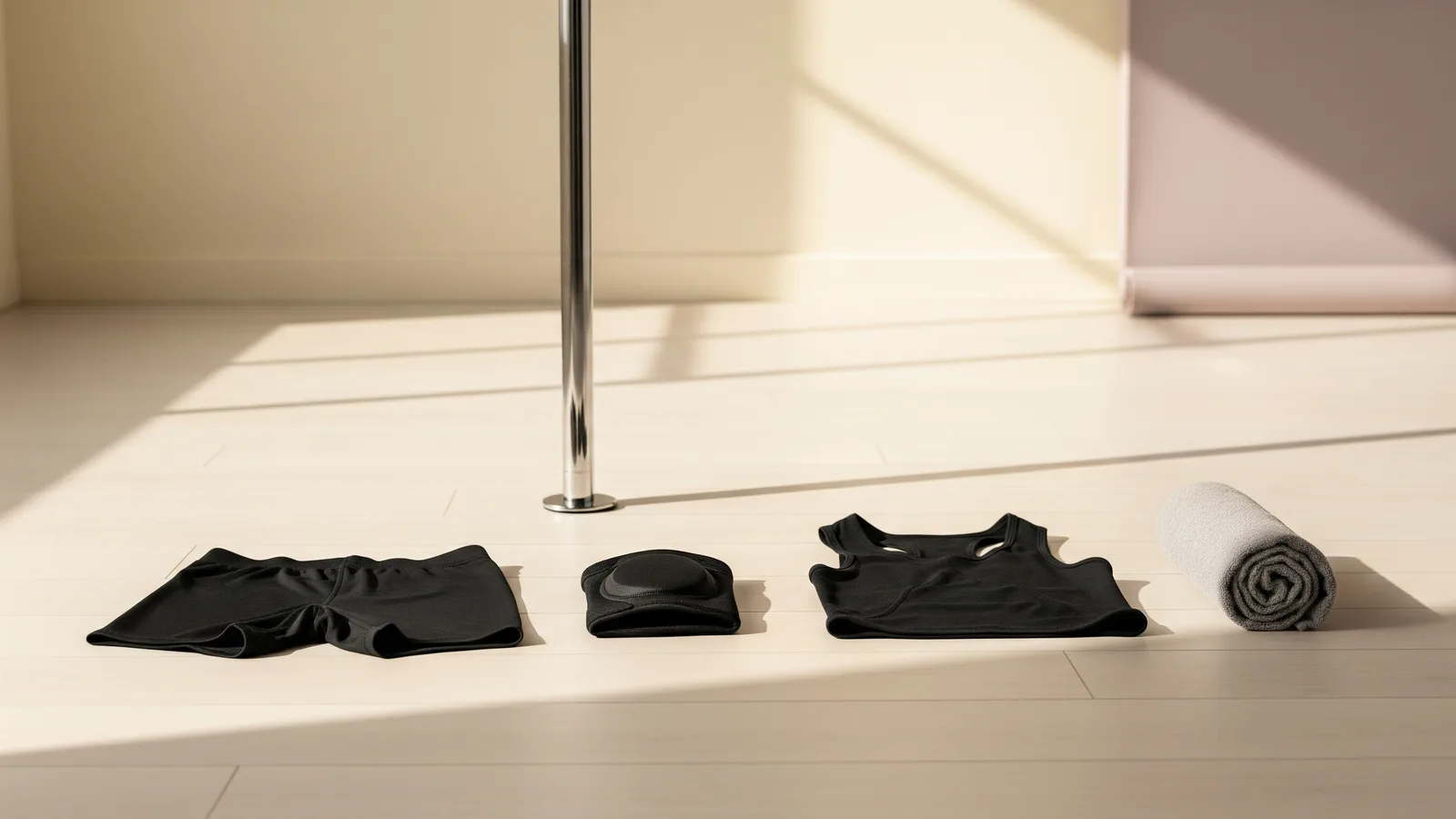
Getting Started
What to Wear to Pole Dancing Class (And What to Leave at Home)
The grip-first guide to what to wear to pole class: why shorts beat leggings, what to leave at home, coverage for the self-conscious, and seasonal notes.

Getting Started
What to Expect at Your First Pole Dancing Class: An Honest Walkthrough
A minute-by-minute logistics guide to your first pole class — arriving, waivers, warm-up, sharing a pole, the moves you'll try, and what to do after.
Getting Started
Can You Teach Yourself Pole Dancing? What Self-Taught Polers Say
Can you teach yourself pole dancing? You can learn the basics at home — but a qualified instructor prevents bad habits and injuries, especially before you invert.