Getting Started
What to Wear to Pole Dancing Class (And What to Leave at Home)
The grip-first guide to what to wear to pole class: why shorts beat leggings, what to leave at home, coverage for the self-conscious, and seasonal notes.
Pole Club Team5 min read
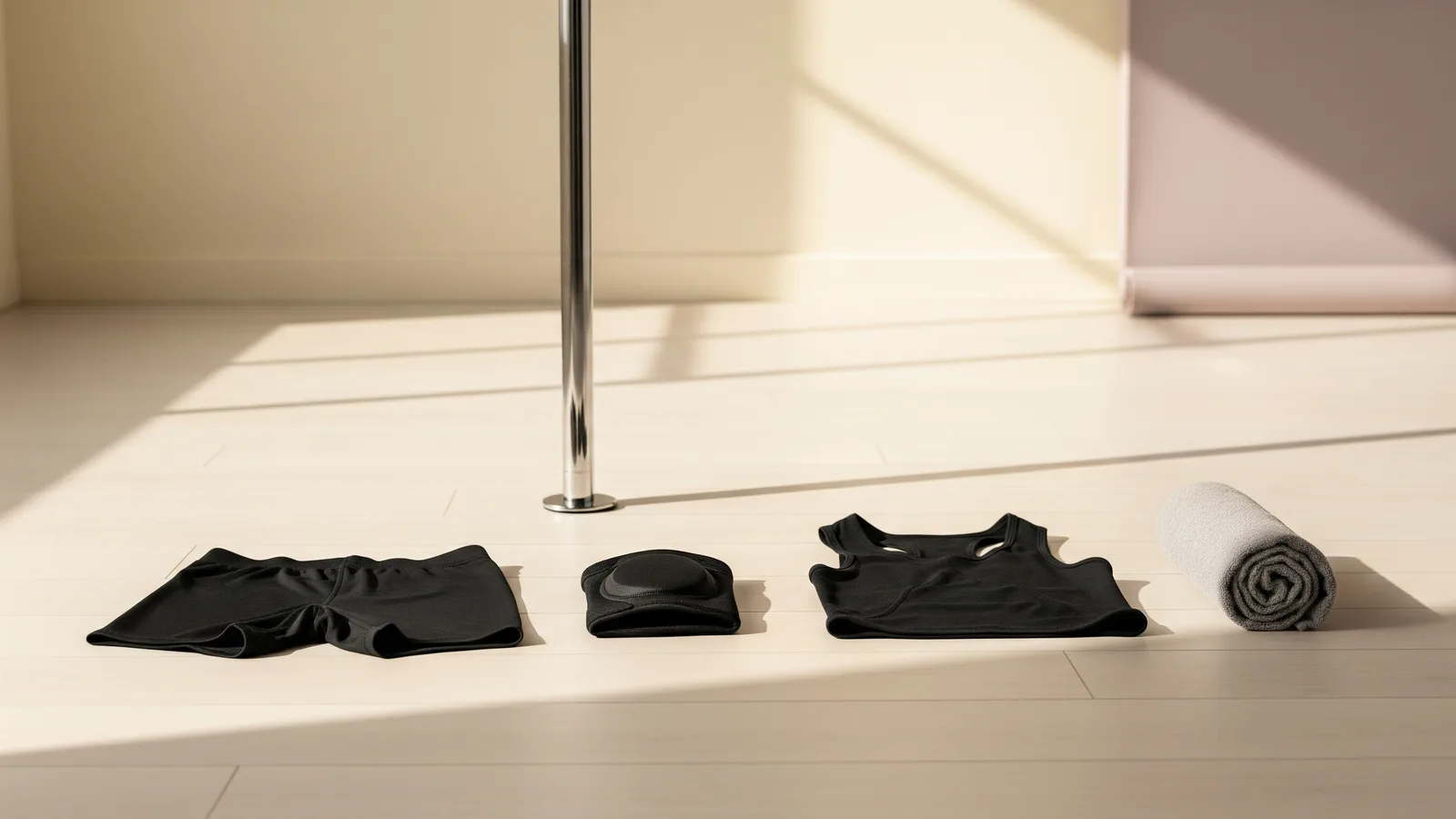
Wear shorts and a fitted t-shirt or vest to pole class. You grip the pole with the bare skin of your legs and arms, so covered limbs slide off the metal. That's the whole rule in one line — everything else in this guide is the reasoning, the exceptions, and the reassurance if showing skin makes you uneasy.
It genuinely comes down to friction. Fabric between your skin and the chrome removes the grip you need to hold a spin or a sit, which is why the sport has settled on shorts as standard rather than leggings. Once you understand that, deciding what to wear to pole dancing class gets much simpler.
Why do leggings and long sleeves slip on the pole?
Leggings and long sleeves slip because pole grip relies on skin contact, and fabric slides against chrome. A pole sit, a leg hang or a basic spin all use the skin of your inner thighs, backs of your knees or the crook of your arm to hold on. Cover those areas and the move simply won't stick — you'll slide down and blame yourself when it's really the trousers.
This catches out almost every beginner who assumes gym leggings are the safe, modest option. They're the one thing that makes a first class harder. If you own nothing pole-appropriate, plain sports shorts and any close-fitting top will do the job perfectly for your first few weeks — you do not need to buy specialist polewear to start.
The same friction logic explains a couple of smaller choices. A close-fitting top beats a baggy one not for looks but because loose fabric rides up, flaps into your grip and hides the body lines your instructor needs to see to correct you. And a top that stays put means you're not tugging it down mid-move, which matters more than you'd think when your hands are busy holding the pole.
What should you wear, and what should you leave at home?
The short version: bring anything that leaves skin free to grip, and leave anything slippery, scratchy or greasy at home. Here's the do and don't at a glance.
| Bring / wear | Leave at home |
|---|---|
| Sports shorts (mid-thigh or shorter) | Full-length leggings and joggers |
| Fitted t-shirt, vest or crop top | Baggy tops that ride up or hide your form |
| A small towel for sweaty hands | Body lotion, oil or fake tan on class day |
| Bare feet (pole is done barefoot) | Socks and trainers on the pole itself |
| Hair tied back | Rings, watches and bracelets |
| A refillable water bottle | Long necklaces and dangly earrings |
How much skin do you actually have to show?
You need bare legs from roughly mid-thigh down and bare arms for most beginner moves, but you have real control over the rest. Longer shorts and a vest cover far more than you'd expect while still leaving the exact grip points free, and plenty of experienced polers train in modest, comfortable kit rather than the tiny sets you see online.
If showing your body makes you self-conscious, start with the most coverage that still works and shorten as your confidence grows. Nobody in the room is auditing your outfit — beginner classes are full of people in ordinary shorts and t-shirts, far too busy with their own sweaty grip to notice yours. A studio that pressures you to wear less is a studio to leave.
The self-conscious feeling usually fades faster than the grip lessons land. If nerves about the whole first class are on your mind, not just the outfit, it's worth reading through what actually happens in your first pole class so the unknowns shrink.
Does what you wear change with the seasons?
Your pole kit itself stays much the same year-round — shorts and a top for grip — but the studio temperature and your skin change with the seasons, and both affect how well you stick. In winter, cold skin and cold poles grip badly until you've warmed up properly, so give the warm-up its full attention and arrive early enough not to rush it.
In summer, sweat becomes the enemy of grip rather than cold. A small towel to wipe the pole and your hands between goes a long way, and a light grip aid can help on humid days. Bring a layer for before and after class in any season, because you cool down fast once you stop and a hoodie for the walk home is welcome.
Layering is the practical answer to a cold studio in winter. Warm up in a hoodie and joggers, then strip down to your shorts and top once your body is warm and the moves begin — you can peel layers off between the warm-up and the pole work. Just don't be tempted to pole in the joggers to stay warm, because that's the leggings problem all over again.
What about shoes, kneepads and other extras?
For a standard beginner fitness class you need nothing on your feet — pole is done barefoot for grip and safety. Save the Pleasers and other platform heels for a dedicated heels class, and even then only once you're ready; they're not part of a first beginner lesson. Trainers or grippy socks are only for the warm-up if the floor is cold.
Grip aid is the other thing beginners ask about, and the honest answer is you probably won't need your own to begin. Most studios keep some to hand and will offer it if your hands are sweating; buying a tub before you know whether you're a sweaty-palmed poler is money spent early. If you do end up wanting one, a small liquid chalk or a dry-hands style product suits most people, and your instructor can point you at what works for the studio's poles.
Kneepads are the one genuinely useful extra, and only once you start floorwork or exotic-style moves that put you on your knees. They're not needed for your first spins and sits, so there's no rush to buy any. When you do want the finer detail on kit and grip aids, our full what to wear guide and grip guide go deeper than we can here.
That's really the whole picture. Turn up in shorts and a top with clean, lotion-free skin and you're dressed correctly for any beginner class in the country. If you want the wider getting-started view, the complete beginner's guide to pole covers cost, first moves and finding a studio too.
Common questions
- Can I wear leggings to pole class?
- Not for most moves. Leggings cover the skin you need to grip the pole, so spins, sits and leg hangs slide off the fabric. Wear shorts that leave your thighs bare. If you're self-conscious, choose longer shorts and shorten them as your confidence grows over the first few weeks.
- Do I need to buy special polewear for my first class?
- No. Plain sports shorts and any close-fitting t-shirt or vest work perfectly to start. Specialist polewear is comfortable and hard-wearing once you're committed, but it's entirely optional. Save your money for classes and pick up dedicated kit later if you catch the bug.
- Why can't I use moisturiser before pole class?
- Moisturiser, body oil and fake tan leave a film on your skin that transfers to the pole and destroys grip — the first thing you need to hold a move. Come with clean, dry, product-free skin. Save any lotion for after your shower once class is finished.
- What do I wear to pole class if I'm self-conscious about my body?
- Start with the most coverage that still leaves your thighs and arms free to grip — longer shorts and a fitted vest work well. Beginner rooms are full of ordinary shorts and t-shirts, and nobody is judging your outfit. Shorten your kit at your own pace, or not at all.
Keep reading
See all posts →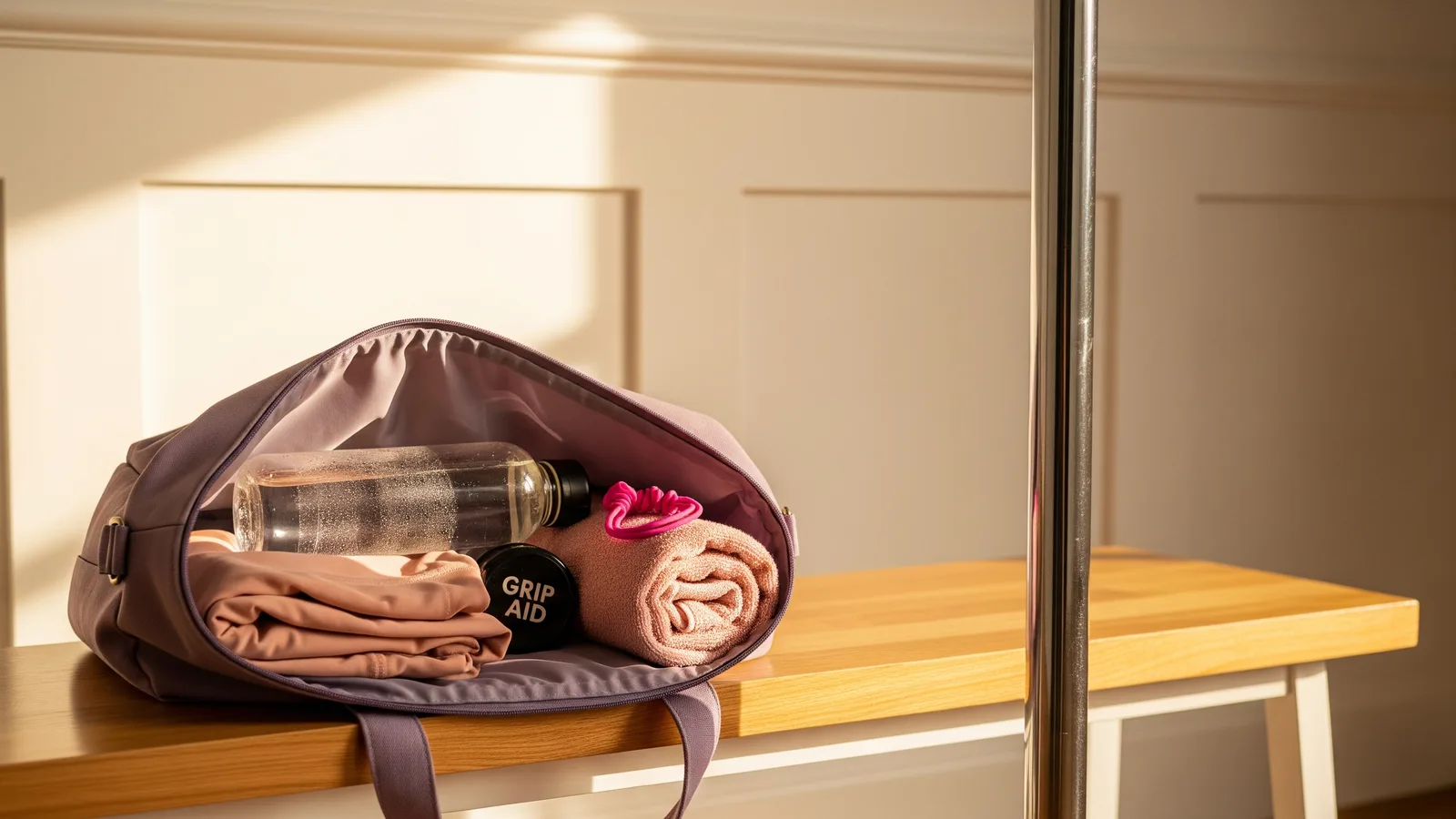
Getting Started
What to Expect at Your First Pole Dancing Class: An Honest Walkthrough
A minute-by-minute logistics guide to your first pole class — arriving, waivers, warm-up, sharing a pole, the moves you'll try, and what to do after.
Getting Started
Can You Teach Yourself Pole Dancing? What Self-Taught Polers Say
Can you teach yourself pole dancing? You can learn the basics at home — but a qualified instructor prevents bad habits and injuries, especially before you invert.
Getting Started
Static vs Spinning Pole: Which Should Beginners Learn First?
Static or spinning pole for beginners? Most people learn static first for control and grip, then add spinning later. Here's how they differ and why the order matters.