Getting Started
Static vs Spinning Pole: Which Should Beginners Learn First?
Static or spinning pole for beginners? Most people learn static first for control and grip, then add spinning later. Here's how they differ and why the order matters.
Pole Club Team5 min read
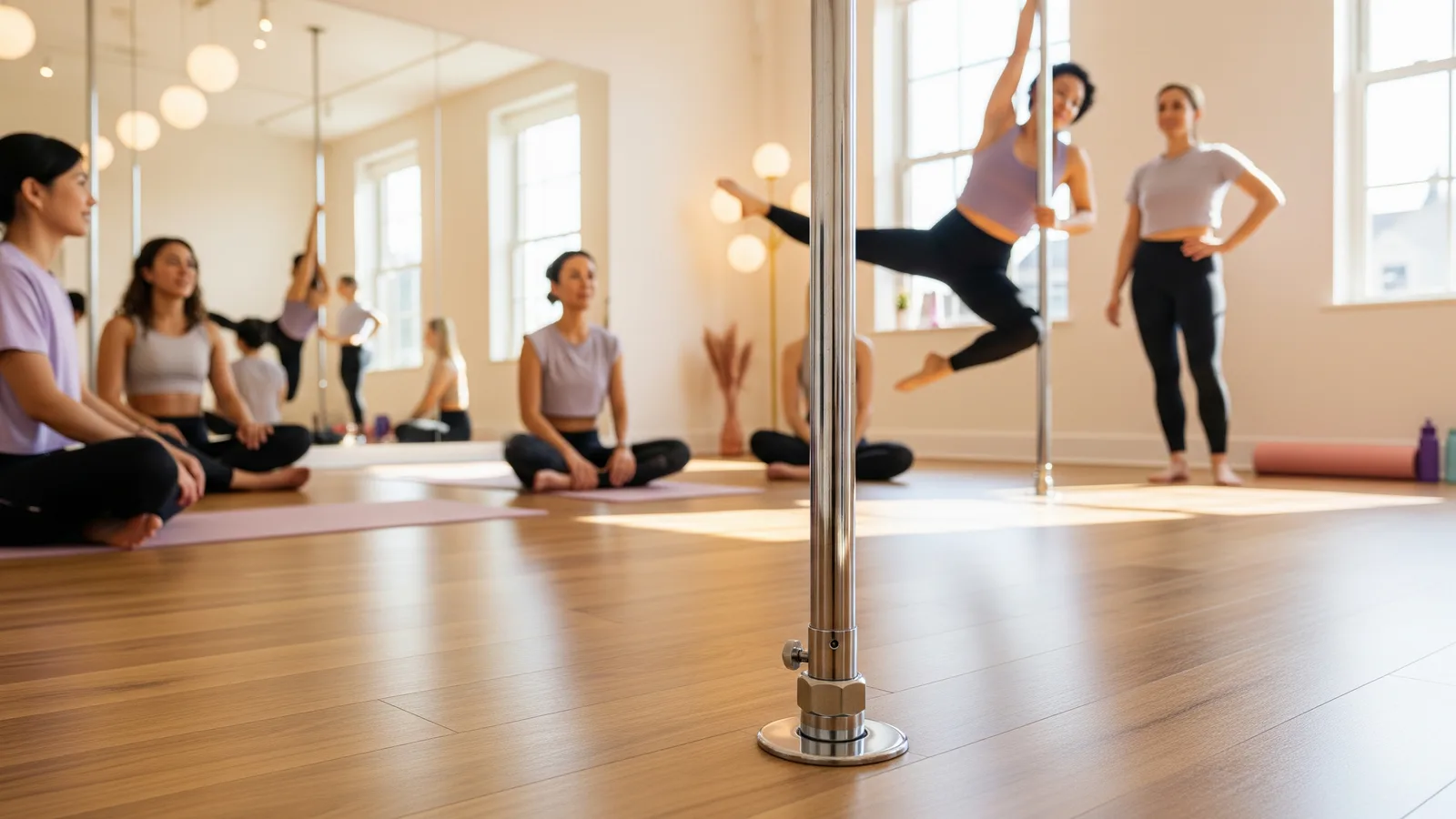
Most beginners learn static pole first. A static pole is locked so it doesn't rotate, which lets you focus on grip, technique and control without also wrestling momentum — and it doesn't make you dizzy. Spinning pole, where the pole rotates freely, tends to come a few weeks later once your foundations feel steady. There's no wrong order, but static-first is the gentler on-ramp for a reason.
Plenty of studios use poles that switch between the two modes, so this isn't a permanent choice you make on day one — it's about which mode you spend your early weeks in. Understanding how static pole and spinning pole actually differ in feel, difficulty and dizziness helps you know what to expect from either, and why most beginner courses lean static to begin with.
Static or spinning pole for beginners: which should you learn first?
For beginners, static pole is usually the one to learn first, because a locked pole lets you concentrate on grip and body position without managing spin. Momentum is a whole extra variable, and adding it before you can reliably hold your own weight makes everything harder to feel and correct. Static builds the foundation that makes spinning pole click faster later.
That said, 'first' doesn't mean 'only'. Many studios introduce spinning pole a few weeks in, and most experienced polers happily train both. If your nearest studio only offers one mode to start with, that's completely fine — you'll transfer the skills either way. The order is a helpful default, not a rule you'll be marked on.
How do static pole and spinning pole differ?
Static pole stays still and rewards control; spinning pole rotates and rewards flow — but it can bring on dizziness while your body adjusts. The moves overlap enormously, so learning one is never wasted on the other. The differences that matter to a beginner are how each one feels, how forgiving it is of technique errors, and whether it'll make your head spin.
| Static pole | Spinning pole | |
|---|---|---|
| Feel | Grounded, controlled, deliberate | Flowing, graceful, momentum-driven |
| Difficulty for beginners | Gentler — one variable at a time | Harder — you manage rotation too |
| Dizziness | None | Common at first; settles with practice |
| What it teaches | Grip, control, clean technique, hold strength | Flow, momentum control, spatial awareness |
| Forgiveness of sloppy grip | More forgiving — you can pause and fix | Less forgiving — momentum exposes weak grip |
| Best for early weeks | Building foundations and confidence | Adding once foundations feel steady |
Why does spinning pole make you dizzy?
Spinning pole makes you dizzy because your inner ear and eyes are tracking continuous rotation your body isn't used to. It's the same mechanism as spinning in a desk chair, and like that, it settles as your vestibular system adapts over a few sessions. Nearly every beginner feels it on spinning pole, and nearly every beginner stops noticing it within a handful of classes.
The dizziness is the main reason static pole tends to come first: it's one less thing to fight while you're still learning to grip and hold. On spinning pole, fixing your gaze on a spot, keeping spins short at first, and stepping off between attempts all help your body adjust. If it's severe or lingers well after class, mention it to your instructor rather than pushing through.
What do you actually learn on static pole first?
On static pole you learn the foundations everything else is built on: how to grip, spins like the fireman, a pole sit, basic climbs and holds, and how to link a couple of moves. Because the pole doesn't move, you can pause mid-move, feel where your weight is, and correct your technique — which is exactly what a beginner needs.
Those foundations transfer straight onto spinning pole, which is why static-first pays off. A clean grip and a solid pole sit don't change just because the pole rotates; you simply add momentum management on top. If you'd like to see the early moves named and demonstrated, our first ten pole moves guide covers what most beginner courses teach, and the moves dictionary breaks each one down by level.
“Static pole teaches you to hold your weight. Spinning pole teaches you to move with it. You want the first before the second.”
When should a beginner move on to spinning pole?
A beginner is usually ready for spinning pole once static spins, a pole sit and basic grip feel reliable — often a few weeks into a beginner course. There's no fixed milestone; it's more about whether you can hold your own weight without thinking through every step. When that's automatic, adding rotation feels like a fun new challenge rather than a scramble.
Your instructor will usually make the call, and a good one won't switch you to spinning pole before your grip and control can handle it. If your studio runs the two as separate classes, ask when they'd suggest trying a spinning session — and don't feel you have to rush. Finding a teacher whose judgement you trust matters here; our guide to finding an instructor who's right for you helps.
Do you have to choose between static and spinning pole?
No — you don't have to choose between static and spinning pole, and most polers train both long-term. They complement each other: static builds control and clean lines, spinning builds flow and momentum awareness. Learning one makes you better at the other, so the goal isn't to pick a side but to build a foundation and branch out.
What matters far more than static versus spinning is finding a studio with qualified instructors, small beginner classes and a vibe that suits you. Browse by town on Pole Club to compare class types and see which studios offer static, spinning or both — pole classes in Glasgow is one starting point, and every listed UK town has its own page. If you're still weighing up the whole first-steps picture, our complete beginner's guide to pole pulls it together.
Common questions
- Is static or spinning pole easier for beginners?
- Static pole is generally easier for beginners. Because a static pole doesn't rotate, you can focus on grip and technique without managing momentum, and it won't make you dizzy. Spinning pole adds rotation and a learning curve, which is why most beginner courses start with static.
- Does spinning pole always make you dizzy?
- Dizziness is common on spinning pole at first because your inner ear is adjusting to continuous rotation. It usually settles within a handful of sessions. Keeping early spins short, fixing your gaze on a spot, and pausing between attempts all help your body adapt more quickly.
- Can I learn spinning pole first if I want to?
- You can, and some studios teach it early, but static pole first is the gentler path. Learning grip and control on a locked pole gives you a foundation that transfers straight onto spinning pole. If your studio only offers one mode, that's fine for a beginner.
- Do studios have separate static and spinning poles?
- Many studios use poles that switch between static and spinning modes, so the same pole does both. Others run static and spinning as separate classes. Either way, you don't need to buy anything or choose permanently — the studio provides the equipment and sets the mode.
Keep reading
See all posts →
Getting Started
What to Wear to Pole Dancing Class (And What to Leave at Home)
The grip-first guide to what to wear to pole class: why shorts beat leggings, what to leave at home, coverage for the self-conscious, and seasonal notes.

Getting Started
What to Expect at Your First Pole Dancing Class: An Honest Walkthrough
A minute-by-minute logistics guide to your first pole class — arriving, waivers, warm-up, sharing a pole, the moves you'll try, and what to do after.

Getting Started
Can You Teach Yourself Pole Dancing? What Self-Taught Polers Say
Can you teach yourself pole dancing? You can learn the basics at home — but a qualified instructor prevents bad habits and injuries, especially before you invert.