Poles & Equipment
Chrome vs Stainless Steel vs Brass: Pole Finishes Explained
How chrome, stainless steel, brass and titanium-gold poles differ on grip, allergies, cost and climate — so you can pick the right finish for your skin and home.
Pole Club Team5 min read
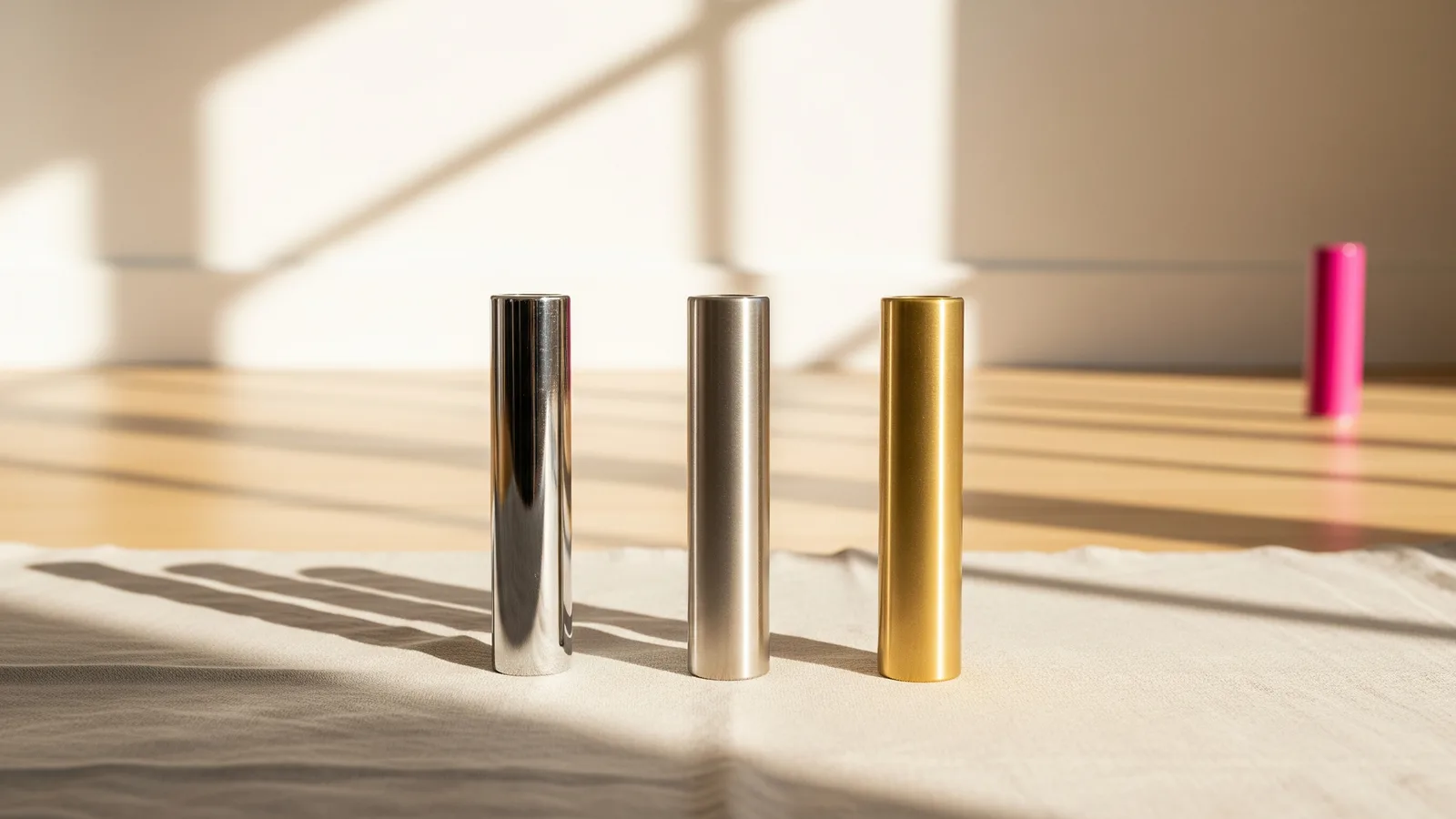
Chrome is the standard, grippy and affordable, but it contains nickel and can irritate people with a nickel allergy. Stainless steel is nickel-safe and durable but slightly less grippy for some. Brass and titanium-gold grip warmly and suit sweaty or humid conditions, at a higher price. Your skin, your climate and your budget decide which finish fits.
The finish is the surface your bare skin actually touches, so it shapes grip more directly than almost any other choice you make. Comparing pole finishes — chrome vs stainless steel and the warmer metals beyond them — is really about matching a surface to your skin's chemistry and the room you'll train in.
Which pole finish grips best?
Chrome is the benchmark most polers judge grip against, and it's what the majority of studios and beginners use, which makes it the easiest finish to transition to and from. Its grip is reliable in normal room conditions, and because it's so common, most grip aids and technique advice assume a chrome pole. For a lot of people it simply works and there's no reason to look further.
Warmer finishes like brass and titanium-gold tend to grip better when your hands sweat or the air is humid, because they hold onto skin more readily than chrome as things get moist. Polers with naturally sweaty palms, or those in warm rooms and summer conditions, often find these finishes stickier and more forgiving. Stainless steel sits differently again — very durable and hygienic, but some people find it a touch less grippy than chrome until they adjust.
What if you have a nickel allergy or sensitive skin?
Chrome plating contains nickel, so if you have a known nickel allergy, chrome can cause skin irritation where you grip — and this is the single most important reason people choose a different finish. Stainless steel is the usual nickel-safe recommendation because it's far less likely to trigger a reaction, and brass and titanium-gold are also chosen by people whose skin reacts to chrome.
If you notice redness, itching or a rash only where your skin meets a chrome pole, that's worth taking seriously rather than pushing through. This is information, not medical advice: if you suspect a metal allergy, a GP or a dermatologist can confirm it and advise you properly. Once you know your skin reacts, choosing a nickel-safe finish for your home pole removes the problem at the source.
Chrome vs stainless steel vs brass vs titanium-gold at a glance
Each finish trades grip, skin-safety, cost and durability differently. Here's how the four common pole finishes compare so you can weigh them against your own priorities.
| Finish | Grip notes | Skin / allergy | Cost |
|---|---|---|---|
| Chrome | Reliable standard, studio-common | Contains nickel, can irritate | Most affordable |
| Stainless steel | Durable; some find slightly less grippy | Nickel-safe, good for sensitive skin | Higher than chrome |
| Brass | Warm grip, good when hands sweat | A common nickel-safe alternative | Premium |
| Titanium-gold | Sticky in heat and humidity | Nickel-safe coating option | Premium |
Cost differences are real but not enormous across a home pole's price. UK home poles broadly run around £250-£450 depending on finish, diameter and length, with chrome at the lower end and brass or titanium-gold finishes commanding a premium. Weigh that against how much a better-gripping or skin-safe finish is worth to you over years of use.
How do the finishes differ on durability and cleaning?
Stainless steel is the most forgiving finish to live with, because it doesn't plate-flake, resists corrosion well and shrugs off frequent cleaning — which is partly why it's valued in humid rooms and shared spaces. Chrome is a plated finish, so while it's hard-wearing in normal use, harsh abrasives or standing moisture can eventually dull or damage the plating over years. Both wipe clean easily with a suitable pole cleaner between sessions.
Brass and titanium-gold need a little more awareness. Brass can tarnish and change tone over time as it reacts with skin and air, which some polers like as a lived-in look and others prefer to polish back. Titanium-gold is a coating, so like any coating it rewards gentle cleaning rather than scouring. Whatever the finish, wiping the pole down after each session keeps grip consistent and the surface in good order for the long run.
Does your room's climate change which finish to pick?
Yes — a warm, humid or poorly ventilated room favours the warmer, stickier finishes, while a cool, dry room grips fine on chrome. If your training space gets hot in summer or steamy from a nearby bathroom, brass or titanium-gold can hold grip where chrome starts to feel slick with sweat. In a stable, cool room, chrome's grip is rarely the problem.
Cold changes things too. Any metal pole grips poorly when it's cold, which is why a proper warm-up matters and why winter sessions feel slippery until you and the pole have warmed. That's a temperature issue rather than a finish one, though it hits chrome as much as anything. Whatever finish you choose, wiping the pole down between sets keeps grip consistent.
Ventilation is the quiet factor people forget. A room that traps heat and moisture — a converted loft in summer, a spare room next to a bathroom — will test any finish's grip more than an airy, temperature-stable space. If you can't change the room, that's a stronger case for a warmer, stickier finish or a reliable grip aid, whereas a well-ventilated room gives chrome the best chance to perform as intended.
If grip is your recurring struggle regardless of finish, a grip aid often solves more than a finish change would. Our grip aid buying guide and the Learn grip guide cover what suits sweaty versus dry hands, and finish is only one piece of that picture.
Finish, diameter and mode together make up a home pole decision, so it's worth reading them as a set rather than in isolation. Our home pole buying guide ties them together, and if you'd rather match a studio's poles exactly, ask yours or browse the class directory to find one to check with.
Common questions
- Is chrome or stainless steel better for a pole?
- It depends on your skin. Chrome is the affordable, grippy studio standard but contains nickel and can irritate allergic skin. Stainless steel is nickel-safe and very durable, though some find it slightly less grippy at first. If you have a nickel allergy, stainless steel is the safer choice.
- Can I use a chrome pole if I have a nickel allergy?
- Chrome contains nickel, so it may irritate skin where you grip if you have a nickel allergy. Many allergic polers choose stainless steel, brass or titanium-gold instead. If you suspect a metal allergy, see a GP or dermatologist to confirm it before buying a home pole.
- Which pole finish is best for sweaty hands?
- Warmer finishes like brass and titanium-gold tend to grip better when hands sweat or the air is humid, holding onto skin more readily than chrome as moisture builds. Polers with sweaty palms often prefer them. A grip aid also helps considerably on any finish in warm conditions.
- Are brass and titanium-gold poles worth the extra cost?
- They can be if you have sweaty hands, train in a warm or humid room, or need a nickel-safe finish. They typically cost a premium over chrome. If you train in a cool, dry space and your skin tolerates chrome, the standard finish usually serves you well.
Keep reading
See all posts →
Poles & Equipment
How to Install a Pressure-Mounted Pole at Home
A step-by-step guide to installing a pressure-mounted pole at home: finding a solid spot, building the pole, setting tension and checking it's safe.

Poles & Equipment
Powder-Coated and Silicone Poles: Are High-Grip Finishes Right for You?
How powder-coated and silicone poles work, who high-grip finishes suit, why they let you train clothed, and how they change your technique.

Poles & Equipment
40mm vs 42mm vs 45mm: Choosing Your Pole Diameter
How pole diameter affects your grip by hand size and discipline, what studios and competitions commonly use, and how to pick the right thickness before you buy.