Poles & Equipment
X-Pole vs Lupit Pole: Which Home Pole Should You Buy?
X-Pole vs Lupit: a fair head-to-head on ranges, mode-switching, diameters, finishes and freestanding options to help UK polers choose the right home pole.
Pole Club Team7 min read
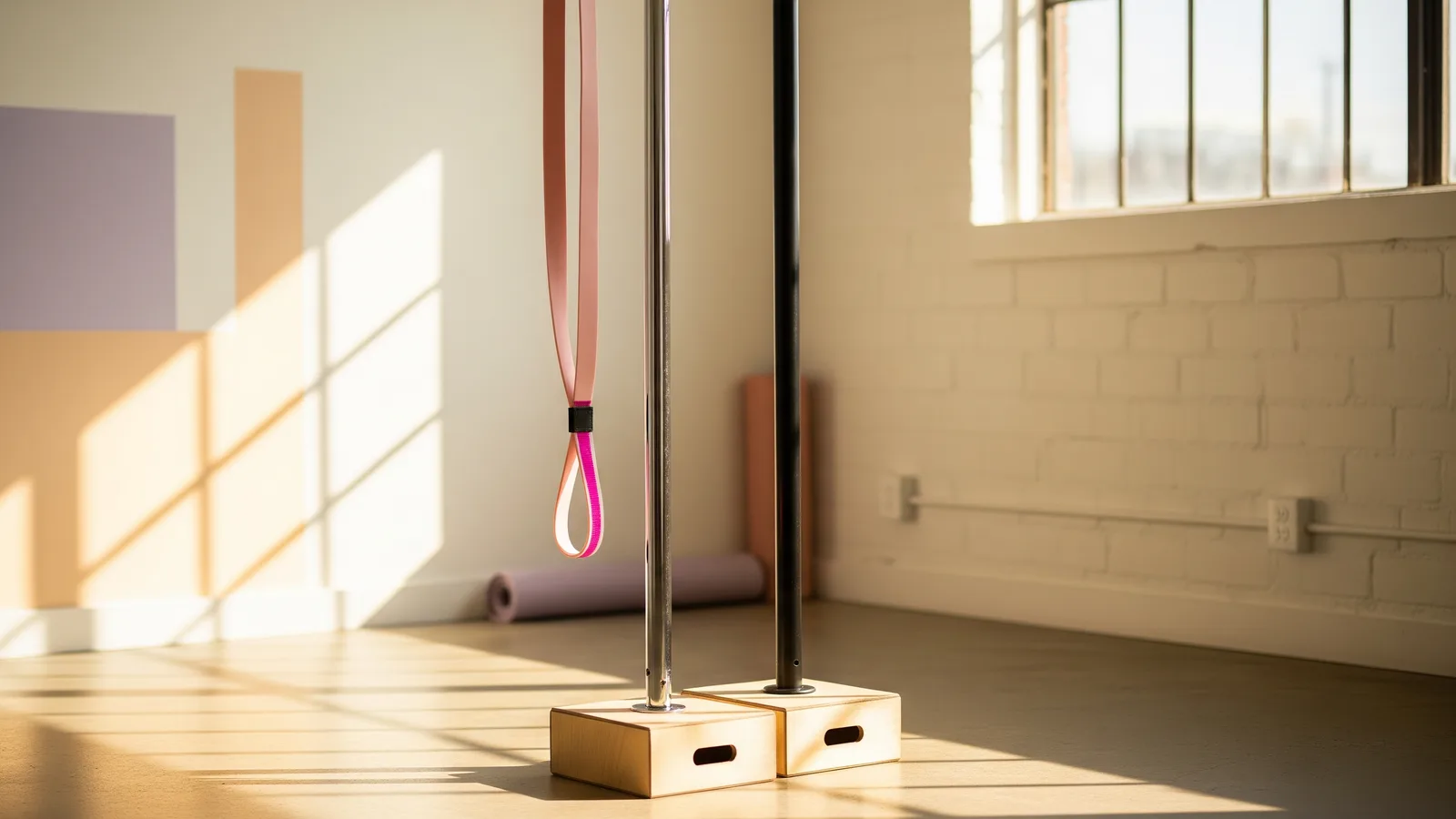
X-Pole and Lupit are the two most trusted home pole brands, and for most UK polers either is an excellent, safe choice. X-Pole offers a broader range of tiers and finishes and is the most common brand in UK studios; Lupit is known for its quick static-to-spinning switching and refined engineering. There's no wrong answer here — the right pick comes down to which studio pole you want to match and a few personal preferences.
Both are properly engineered, load-rated brands with spare parts, resale value and years of trust behind them, so this isn't a safety comparison where one wins. It's a fit comparison. The differences that actually matter to a buyer are the range structure, how each swaps between static and spinning, the diameters and finishes on offer, and the freestanding options — and that's what this guide compares, fairly and without picking a false winner.
How do the two brands' ranges compare?
X-Pole runs a wider tiered range, while Lupit keeps a tighter, refined line-up. X-Pole's home poles span the static-only SPORT (a cheaper entry point), the static-and-spinning XPERT (its popular all-rounder), the top-tier XPERT PRO, and the freestanding X-STAGE. Lupit's home range centres on the Classic G2 and the Diamond G2 — the Diamond being the Classic decorated with Swarovski crystals — plus the freestanding Lupit Stage.
The practical upshot is that X-Pole gives you more entry and budget flexibility, including a genuinely cheaper static-only option for absolute beginners, whereas Lupit positions its core poles at a consistent, premium quality level with the Diamond as a decorative flourish rather than a performance step up. If you want the widest menu of tiers, X-Pole edges it; if you want a small, well-considered choice, Lupit's simplicity is a feature, not a limitation.
How does each switch between static and spinning?
Both brands' core home poles do static and spinning, and switching is straightforward on each, but the mechanisms differ. Lupit's G2 poles use a Quick-Lock system designed to swap between static and spinning quickly and securely, which owners often praise for its speed. X-Pole's XPERT and XPERT PRO switch modes via their own base mechanism and bearings, and are similarly designed to move between the two without dismantling the pole.
For a home poler who switches modes often, both are perfectly workable, and the difference is one of feel rather than capability. Lupit markets the speed of its Quick-Lock heavily; X-Pole's system is well proven across thousands of studios. If quick, frequent switching between static and spinning is central to how you train, it's worth handling both in person or asking your studio which they find faster. On mode-switching, both brands deliver — neither locks you into one mode.
If you're still deciding which mode you'll actually train on first, that shapes how much the switching mechanism matters to you. Our guide to static or spinning pole for beginners walks through which to learn on early, which is worth settling before you weigh either brand's switching system too heavily.
What diameters and finishes does each offer?
Both offer the 45mm industry-standard diameter plus a smaller option for smaller hands — X-Pole at 40mm, Lupit at 42mm. On finishes, X-Pole has the broader palette, while Lupit focuses on a refined core set. Diameter and finish are personal, skin-dependent choices, so the wider palette matters only if you have a specific preference the narrower one can't meet.
| X-Pole | Lupit | |
|---|---|---|
| Standard diameter | 45mm | 45mm |
| Smaller option | 40mm | 42mm |
| Finishes | Chrome, stainless, brass, titanium gold, powder coat, silicone (45mm) | Chrome (nickel-free), stainless steel, powder coat |
| Static/spinning | Yes (XPERT, XPERT PRO); SPORT is static-only | Yes, via Quick-Lock (Classic G2, Diamond G2) |
| Freestanding option | X-STAGE | Lupit Stage |
| Studio prevalence (UK) | Most common | Common, growing |
X-Pole's extra finishes — brass, titanium gold and a silicone-sleeved option — give it an edge if you have a specific grip need, such as a silicone pole to practise clothed or brass for very sweaty hands. Lupit's tighter set of chrome, stainless and powder coat covers what most polers actually use. If finish variety matters to you, X-Pole wins on choice; if you just want a reliable chrome or stainless pole, both are equal. Our home pole buyer's guide explains which finish suits which poler.
What about freestanding stages?
Both brands make freestanding stages for polers who can't or don't want to use the ceiling — X-Pole's X-STAGE and Lupit's Lupit Stage. A stage sits on a broad, weighted base and needs no ceiling at all, which makes it the answer for suspended ceilings, very high or sloped ceilings, garden studios, and performers who travel with a pole. Both cost considerably more than a pressure-mounted pole and take up a larger footprint.
The choice between the two stages tends to follow the same logic as the pressure-mounted poles: match your studio, handle both if you can, and weigh portability, base size and price for your specific space. Freestanding stages are a bigger commitment in cost and room, so most home polers only reach for one when a pressure-mounted pole genuinely won't work in their home — our home pole installation guide helps you work out whether your ceiling rules a pressure-mounted pole in or out.
How do price and value compare?
On price the two brands sit broadly in the same territory for equivalent poles, with X-Pole's static-only SPORT giving it a lower entry point that Lupit doesn't directly match. A pressure-mounted, static-and-spinning pole in chrome or stainless from either brand typically lands in a similar range for a home poler, so price alone rarely decides between them. Prices move with finish, tier and retailer, so treat any figure as a ballpark and check current pricing when you buy.
Value is about more than the sticker, though, and here both brands score well for the same reasons: proper load engineering, available spare parts, and strong resale. A genuine X-Pole or Lupit holds its price on the second-hand market far better than an unbranded pole, which softens the real cost of ownership if you ever sell. Buying either brand new from an official channel, rather than a grey-market listing, is what protects that value and guarantees the correct fittings.
Which is easier to set up and live with?
Both brands install as pressure-mounted poles that wedge between floor and ceiling with no drilling, and both come with clear instructions, so neither is difficult to set up for someone following the guidance carefully. Owners tend to praise Lupit's assembly and its Quick-Lock for day-to-day mode changes, while X-Pole's long ubiquity means plenty of studios, instructors and video guides can talk you through its system. Neither has a meaningful edge in safety when fitted correctly.
Living with either pole comes down to the same routine: verify your ceiling can take the upward load, fit it exactly to the manufacturer's instructions, and retighten and inspect it as they specify. Both brands sell ceiling extensions for tall rooms, so a high ceiling doesn't rule out either. The one non-negotiable with both is that your ceiling must be solid and suitable — a suspended or plasterboard ceiling with a void above may not be safe for either brand's pressure-mounted pole.
So which should you buy?
Buy the brand your studio uses if you can, because training at home on the same pole you use in class makes everything transfer seamlessly. Failing that, choose X-Pole if you want the widest range of tiers and finishes or a cheaper static-only entry point, and choose Lupit if you value its Quick-Lock mode-switching and prefer a smaller, refined line-up. Both are reputable — you will not go wrong with either.
- Match your studio's brand and finish first — seamless transfer beats brand debates.
- Choose X-Pole for the broadest tier and finish choice, or a budget static-only SPORT.
- Choose Lupit for its Quick-Lock switching and a tighter, premium range.
- For most people: a 45mm chrome or stainless, static-and-spinning, pressure-mounted pole from either brand.
- Go freestanding (X-STAGE or Lupit Stage) only if your ceiling can't take a pressure-mounted pole.
Whichever you pick, the pole itself is only half the decision — correct installation and safe practice matter more than the badge on the base. Learn on a studio pole before you buy, so you know pole suits you and understand safe practice. If you're not yet training, start with our beginner's guide to pole and find a studio in the UK directory before committing to any home pole.
Common questions
- Is X-Pole or Lupit better for a home pole?
- Neither is clearly better — both are reputable, load-rated brands trusted across UK studios. X-Pole offers a wider range of tiers and finishes and is the most common studio brand; Lupit is known for quick static-to-spinning switching and a refined line-up. Match your studio's brand where you can.
- Do both X-Pole and Lupit switch between static and spinning?
- Yes. X-Pole's XPERT and XPERT PRO switch modes via their base mechanism and bearings, while Lupit's Classic and Diamond G2 poles use a Quick-Lock system for fast switching. Both are workable for home training; X-Pole's SPORT is the exception, being deliberately static-only as a cheaper entry pole.
- What diameters do X-Pole and Lupit come in?
- Both offer the 45mm industry-standard diameter used in most studios, plus a smaller option for smaller hands — X-Pole at 40mm and Lupit at 42mm. Buy 45mm to match most UK studios unless you have noticeably small hands and struggle to grip the pole fully in class.
- Which brand has more finishes?
- X-Pole offers the broader palette — chrome, stainless steel, brass, titanium gold, powder coat and a silicone option — while Lupit focuses on chrome, stainless steel and powder coat. The extra choice matters only if you have a specific grip need; both cover the finishes most polers actually use.
- Do X-Pole and Lupit both make freestanding poles?
- Yes. X-Pole makes the X-STAGE and Lupit makes the Lupit Stage — both freestanding poles that stand on a weighted base and need no ceiling. They suit suspended ceilings, high or sloped ceilings, garden studios and travelling performers, but cost considerably more and take up a larger footprint than pressure-mounted poles.
Keep reading
See all posts →
Poles & Equipment
Best Dance Poles for Home Use in the UK (2026 Buyer's Guide)
A complete UK buyer's guide to home dance poles: reputable brands, static vs spinning, diameters, finishes, mounting, budget ranges and where to buy safely.
Classes & Costs
Pole Class Etiquette: The Unwritten Rules Every Studio Wishes You Knew
The unwritten rules of pole class etiquette — wiping the pole down, sharing fairly, phones, hygiene and why you should never teach the person next to you. Fit in from class one.
Classes & Costs
How to Practise Pole on a Budget
Practical ways to do pole dancing on a budget — blocks over drop-ins, taster deals, minimal kit, off-pole practice at home and buying second-hand without cutting safety corners.