Getting Started
Pole Class Levels Explained: Beginner to Advanced
How UK studios structure pole dancing levels — beginner, improver, intermediate, advanced — what each covers, how you move up, and why the labels vary.
Pole Club Team6 min read
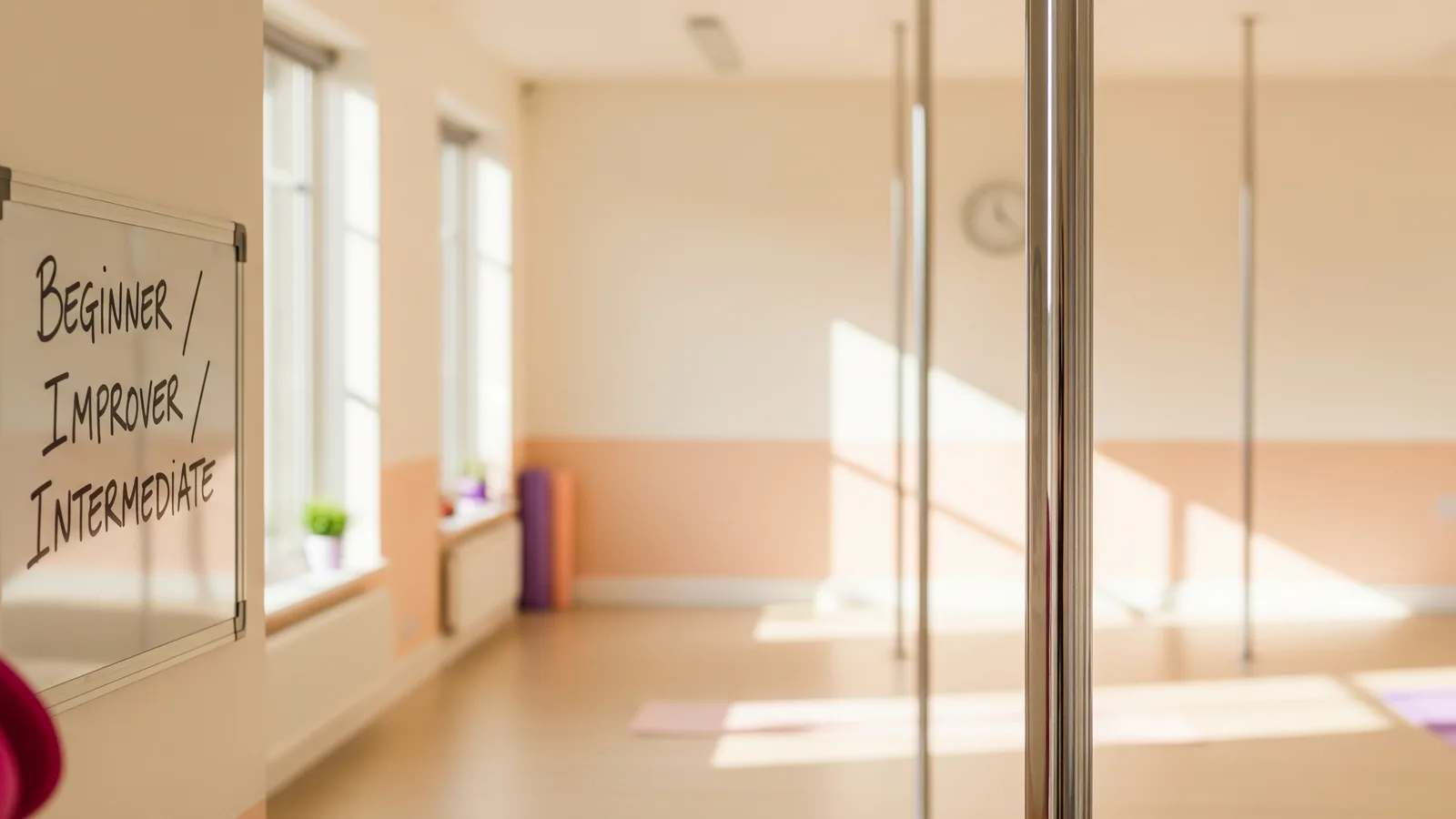
Most UK studios sort pole dancing levels into four broad tiers: beginner, improver, intermediate and advanced. Beginner teaches spins and floorwork on both feet. Improver adds your first inverts. Intermediate builds strength holds and combos. Advanced covers drops, dynamic moves and performance. The names shift between studios, but that ladder is fairly universal.
The reason those labels matter is booking. Turn up to the wrong class and you'll either be lost or bored, so it helps to know roughly what sits behind each word before you reserve a spot. This guide walks the whole ladder, rung by rung, and explains why the same skill can be called two different levels a mile apart.
What are the pole dancing levels, in order?
The standard progression runs beginner, improver, intermediate, advanced, with some studios adding an 'elite' or 'pre-intermediate' tier in between. Each level assumes you can comfortably do everything from the level below, because pole builds strictly on itself — you cannot safely invert until your shoulders and core have done months of spins and sits first.
Here's a snapshot of what each level typically covers, the strength it demands, and roughly how long polers spend there. Treat the timings as loose ranges, not targets — everyone moves at their own pace, and there's no prize for rushing.
| Level | What you'll learn | Strength needed | Typical time here |
|---|---|---|---|
| Beginner | Basic spins, pole sits, climbs, floorwork, transitions on both feet | None to start — built as you go | 3–6 months |
| Improver | First inverts, leg hangs, basic hip holds, longer combos | Beginner strength consolidated | 3–9 months |
| Intermediate | Shoulder mounts, aerial inverts, static strength holds, spin-pole combos | Solid core and grip | 1–2 years |
| Advanced | Drops, dynamic transitions, deadlifts, flexibility tricks, performance | High — years of conditioning | Ongoing |
What does a beginner pole class actually cover?
A beginner pole class covers spins, pole sits, basic climbs and floorwork, all done with at least one foot on the ground or the pole. You'll spend the first block learning to grip properly, hold your own weight in a sit, and link two or three moves into a short sequence. Nothing goes upside down at this stage.
Beginner is also where you build the strength the later levels assume, without ever doing a formal strength session. Every spin trains your grip, every climb trains your arms, every sit trains your core. That's why studios ask you to complete a beginner course rather than jumping in — it's conditioning disguised as fun. If you're weighing up whether you're strong enough to start, the honest answer lives in our guide on whether you need to be strong to pole dance.
If you've never set foot in a studio, knowing the shape of that first session takes the edge off. Our walk-through of what to expect in your first pole class covers the warm-up, the kit and the etiquette so nothing catches you off guard.
When do you learn to go upside down?
Inverting usually arrives at improver level, after three to six months of beginner work, once your core and shoulders can safely take your weight upside down. A good studio will not teach you to invert on day one, however keen you are — the shoulder and neck loading needs a base of strength first, and rushing it is how people get hurt.
Improver is the bridge level, and it's where a lot of polers feel they've properly 'started'. Your first clean invert is a landmark moment, and from there the door opens to leg hangs, hip holds and the shapes that make pole look like pole. It's also, for many, the hardest jump on the whole ladder, so patience matters more here than anywhere.
What separates intermediate and advanced?
Intermediate is about aerial control and strength holds — shoulder mounts, aerial inverts, static shapes held away from the pole. Advanced is about dynamic power and performance — drops, deadlifts, flips and the flexibility tricks that take years of dedicated conditioning to reach safely. The gap between them is measured in years of consistent training, not weeks.
By intermediate, the pace of new moves slows right down. Beginners collect a shape a week; intermediates might spend a month drilling one shoulder mount. That's normal and not a plateau — you're now building the strength and precision that advanced work is impossible without. Cross-training, flexibility work and off-pole conditioning all start to matter here.
Advanced is less a destination than an open horizon. There's no top of the ladder — advanced polers keep finding harder drops, cleaner lines and new combinations for as long as they train. Many also start choosing a style at this point, whether that's exotic, pole sport, or artistic pole, and specialising accordingly.
Why don't level names match between studios?
Level names don't match between studios because there's no single governing body dictating a national curriculum, so each studio sets its own syllabus and labels. One studio's 'improver' is another's 'level 2' or 'beginner plus', and a move taught in intermediate here might sit in advanced down the road. The words are local, even if the underlying progression is shared.
This matters most when you switch studios. Don't assume your old 'intermediate' card gets you into the new studio's intermediate class — expect a chat with the instructor, and possibly a level-check session, so they can see what you can safely do. A responsible studio always assesses rather than takes your word for it, because your safety on an invert depends on it.
The practical fix is simple: read the actual class description, not just the level name. Studios usually list the prerequisite moves ('must be able to invert and climb'), which tells you far more than the label. When you're comparing options, our directory of pole dancing classes lets you see how different studios describe and structure their tiers side by side.
How do you actually move up a level?
You move up when your instructor decides you can safely and consistently perform the current level's key moves, not when a fixed number of weeks has passed. Progression is competence-based: it's about whether you can hold a clean invert every time under control, not whether you've paid for twelve sessions. A good instructor tells you when you're ready.
You can help yourself along by training consistently, conditioning off the pole, and being honest about the moves you're skipping because they scare you. Most 'stuck' polers are missing a strength gap they've been avoiding, not talent. Our thoughts on how often you should pole dance and what realistic first-month progress looks like set sensible expectations for the climb.
One last reassurance: there's no shame in staying at a level for a long time, or repeating a course. Pole is not a race up the ladder, and some of the strongest, most beautiful polers you'll meet have spent years at intermediate by choice, deepening rather than climbing. The level is a booking tool, not a report card.
Common questions
- How long does it take to get to intermediate pole?
- Most polers reach intermediate after roughly one to two years of consistent training, having spent three to six months at beginner and a similar stretch at improver learning to invert. It depends heavily on how often you train and your starting strength, so treat any timeline as a loose guide.
- Can I skip the beginner level if I'm already fit?
- No — good studios ask everyone to complete a beginner course, however fit you are. Beginner classes teach pole-specific grip, technique and safety that gym fitness doesn't cover, and they build the exact strength later levels assume. Being strong helps, but it doesn't replace the foundations.
- When will I learn to go upside down in pole?
- Usually at improver level, after three to six months of beginner training, once your core and shoulders can safely take your weight. A responsible studio gates inverting behind a strength check rather than teaching it in your first session, because the neck and shoulder loading needs a proper base first.
- Why is my new studio putting me in a lower level?
- Because level names aren't standardised, and studios assess rather than take your word for it. Your old 'intermediate' might not match the new syllabus, and instructors need to see your inverts and climbs firsthand before clearing you for advanced moves. It's a safety step, not a demotion.
Keep reading
See all posts →
Getting Started
What to Wear to Pole Dancing Class (And What to Leave at Home)
The grip-first guide to what to wear to pole class: why shorts beat leggings, what to leave at home, coverage for the self-conscious, and seasonal notes.

Getting Started
What to Expect at Your First Pole Dancing Class: An Honest Walkthrough
A minute-by-minute logistics guide to your first pole class — arriving, waivers, warm-up, sharing a pole, the moves you'll try, and what to do after.

Getting Started
Can You Teach Yourself Pole Dancing? What Self-Taught Polers Say
Can you teach yourself pole dancing? You can learn the basics at home — but a qualified instructor prevents bad habits and injuries, especially before you invert.